AI CRO tools
AI CRO Tools: How to Lift Conversions Without Guessing
On this page
A founder I work with spent a month obsessing over his button colors. He swapped green for orange, moved the call to action higher, rewrote the headline twice, and watched his conversion rate refuse to budge. The problem was not the button. He had eighty visitors a week, and no amount of tweaking can find signal in eighty visitors. He was running conversion rate optimization on a site that did not yet have a conversion problem. It had a traffic problem.
This is the trap AI CRO tools can make worse, because they make the tweaking feel productive. Point an AI at your site and it will happily generate fifty variants to test, none of which will matter if nobody sees them. So before you buy anything, it helps to be clear about what these tools actually do, where they earn their cost, and the one situation where the smartest move is to ignore CRO entirely and go get traffic instead.
What AI actually changes about CRO
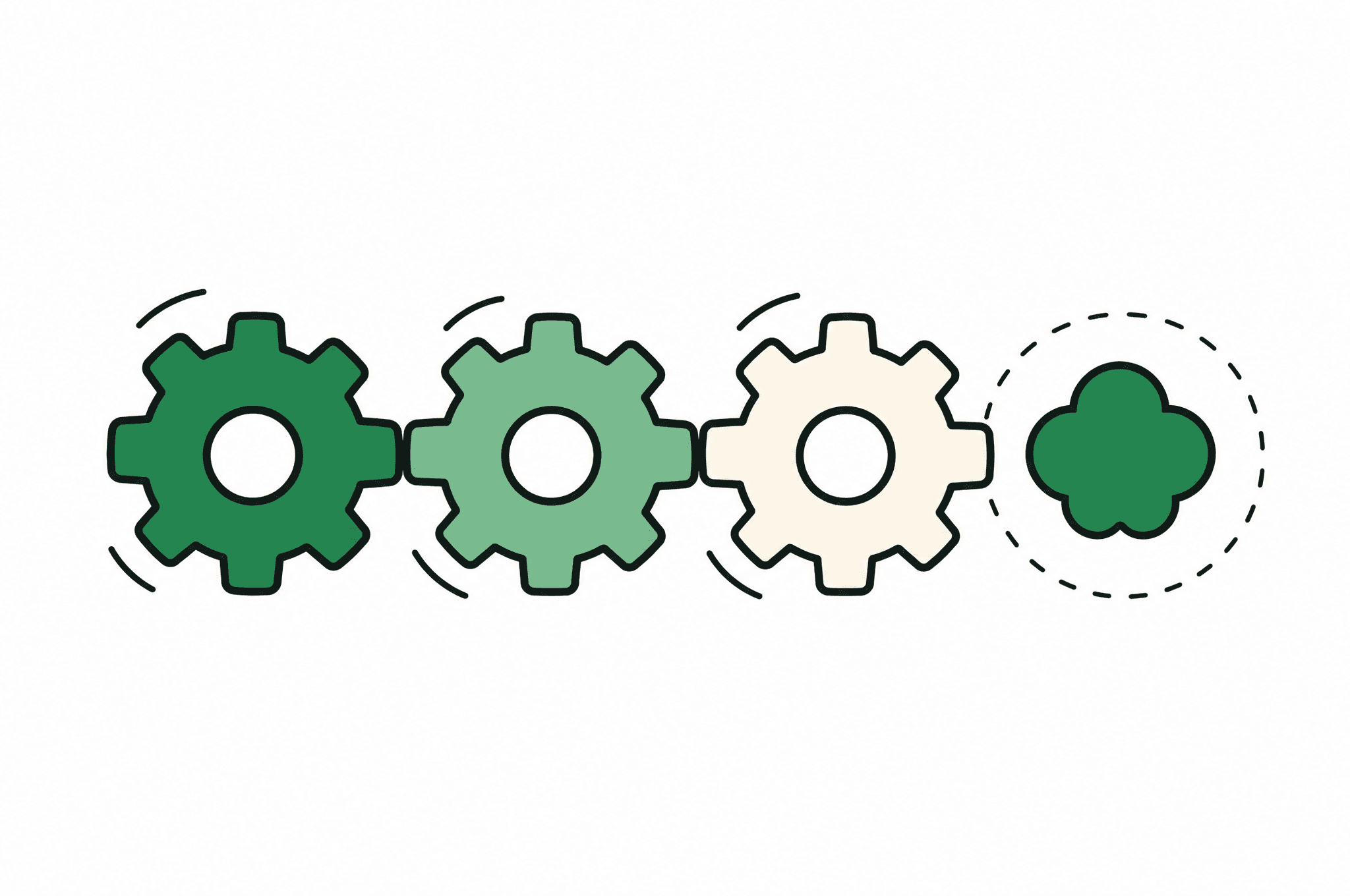
Conversion rate optimization has always been three jobs: figure out where people drop off, come up with a change that might fix it, and test whether the change works. AI compresses the first two and leaves the third alone.
The research used to take days. You would watch session recordings, read heatmaps, dig through analytics, and try to spot the pattern. AI CRO tools now read that behavioral data and surface the leaks for you: the form field everyone abandons, the pricing page nobody scrolls past, the mobile layout that buries the button. Then they draft variants, ten headline rewrites or three layout options, in the time it takes to read this sentence.
What AI does not change is the test. A change is still a hypothesis until real users prove it, and that proof requires traffic and patience. The tool got faster at guessing. It did not repeal the math.
The honest limit: AI cannot fix a traffic problem
Here is the rule most CRO content skips. An A/B test needs roughly hundreds of conversions per variant to reach statistical significance, and a small site simply will not produce them. If you convert at three percent on five hundred visitors a month, a single variant might take a year to call. By then the test is meaningless.
So if you are early and traffic is thin, do not run tests at all, and do not buy an AI CRO tool to run them for you. Use AI differently: have it review your page once and flag the obvious breakage, then fix those things directly without testing. A confusing headline, a five-field signup form, a checkout that breaks on mobile. These are not hypotheses, they are bugs, and you fix bugs, you do not A/B test them.
The honest move for a low-traffic startup is to spend that energy on getting visitors, the work in SEO for startups and how to use AI for marketing. CRO is what you do once people are actually arriving.
Where AI CRO tools genuinely help
Once you have real traffic, a few thousand visitors a week and up, AI CRO tools start to pull their weight, and it is worth naming exactly how.
They cluster behavior. Instead of you watching a hundred session recordings, the tool groups them and tells you that mobile users from paid ads bounce on the pricing page at twice the rate of everyone else. That is a specific, testable insight you would have taken days to find by hand.
They generate and rank variants. Good AI CRO tools do not just spit out copy; they score each idea against the drop-off it targets, so you run the three changes most likely to move the number rather than the first three you thought of. Since Google sunset Google Optimize in 2023 (Google, 2023), the testing layer is a paid tool with finite slots, and spending those slots on ranked hypotheses instead of hunches is the real saving.
And they personalize. Showing a returning visitor a different headline than a first-timer is the kind of rule that is tedious to build by hand and quick to set up when a model writes the variants.
What still needs a human
The work AI is worst at is the work that decides whether CRO succeeds: knowing what is true about your product and what sounds like you.
A model will cheerfully generate a headline that converts better in a test and overpromises something your product does not do. That wins the click and loses the customer two weeks later, and no conversion dashboard will show you the damage. Brand voice, honesty, and judgment about which "winning" variant you can actually stand behind are human calls. The same goes for interpreting a test that came back ambiguous, which most of them do.
So keep the loop simple. Let the tool find the leak, draft the variants, and rank them. Then you, the person who knows the customer, pick what ships and approve the copy before a single visitor sees it. The conversions come from relevance and truth, and those do not come out of a model unsupervised.
How to start without a big stack
You do not need a five-tool CRO stack to begin, and assembling one is a common way to feel busy without moving the number.
Start with the free leak audit. Point an AI tool at your highest-traffic page and ask it, plainly, where visitors are most likely to get confused or drop off. Fix what it finds that is obviously broken. No test needed.
Then, only if you have the traffic, test the two or three highest-ranked hypotheses, one at a time, and give each enough time to reach significance before you call it. Resist running five tests at once on a site that can barely power one. A single clean result beats five muddy ones.
Watch one metric per test and write down what you expected before you start. The discipline is not in the tooling; it is in changing one thing, measuring honestly, and not fooling yourself when the data is thin. That discipline is exactly what a one-person team tends to skip, which is the broader problem in the one-person growth stack.
Watch the whole funnel, not just the page
A conversion problem is rarely where you first look for it, and the most useful thing AI brings to CRO is the ability to see the whole path at once instead of one page in isolation.
A visitor who bounces off your pricing page might not have a pricing problem. They might have arrived from an ad that promised something the page does not deliver, so the mismatch is the leak, not the page. Because an AI tool can read the journey from traffic source to landing page to signup to first action, it can tell you the drop-off is upstream of the page you were about to redesign. That is a different and better answer than a heatmap of one screen.
So before you test a single element, ask the tool where in the funnel people actually fall out. Fixing the step that loses the most people beats polishing a step that was already working. The page is one frame. The funnel is the whole film.
What automated CRO looks like with Revnu
Revnu treats conversion work as one lane of a cross-channel growth agent, not a separate tool you babysit. Because it is already running your traffic channels, it sees where arriving visitors stall, drafts the variants worth trying in your voice, and surfaces the change most likely to move signups, rather than handing you a dashboard to interpret alone. Every variant waits for your approval before it goes live, so nothing ships in your name that overpromises. And because the same agent runs the SEO and outreach that bring the traffic, it knows when you have enough volume for a test to mean something and when you do not, which is the judgment that decides whether automated CRO with AI helps or just keeps you busy. The full set of lanes is on the features page.
Where this leaves you
AI CRO tools are real and useful, with one condition: you have to have traffic for them to optimize. If you do, use AI to find the leaks fast, draft and rank the variants, and personalize the experience, while you keep the judgment about voice and truth and which winner you can stand behind. If you do not have traffic yet, the smartest CRO move is to close the laptop on button colors and go earn visitors first. Audit your top page with an AI tool this week, fix what is plainly broken, and only reach for testing once enough people are actually showing up to make the answer real.
Let Revnu run this for you.
Connect your product and Revnu drafts the SEO, ads, and outbound. You approve in one tap. Book a 15-minute call and see it on your stack.
Book a demoFrequently asked questions
What do AI CRO tools actually do?
They speed up the slow parts of conversion work: reading session recordings and heatmaps to spot where people drop off, generating copy and layout variants to test, and ranking which hypotheses are worth running first. They do not replace the test itself. You still need real traffic and a human deciding what matters, but the research and drafting that used to take days happens in minutes.
Can AI CRO tools work for a site with low traffic?
Not for A/B testing. A test needs hundreds of conversions per variant to reach significance, and a low-traffic site will never get there. If you have a few hundred visitors a week, skip testing entirely. Use AI to find the obvious leaks (a confusing headline, a broken mobile flow) and fix them directly. Testing is a tool for sites that already have volume.
Do AI CRO tools replace an A/B testing tool?
No. Most AI CRO tools sit on top of testing and analytics, not instead of them. They generate hypotheses and variants and read the results; you still run the experiment through a testing engine and need enough traffic to call it. Since Google Optimize shut down in 2023, the testing layer is a separate paid tool, and AI helps you waste fewer of those test slots on weak ideas.
Is automated CRO with AI safe for brand voice?
Only with a human in the loop. AI is good at generating ten headline variants fast and bad at knowing which one sounds like you and tells the truth about your product. Let it draft and prioritize, then approve every variant before it goes live. The conversions come from relevance and honesty, and those still depend on someone who knows the customer reviewing the copy.
Written by
Art Freebrey
Co-founder, Revnu