marketing for dev tool startups
How a Dev-Tool Startup Gets Its First 100 Signups Without a Marketing Team
On this page
- The before: a great tool nobody can find
- The setup: connect the product, the docs, and the channel
- The SEO lane: docs-led content that ranks
- The outreach lane: messages an engineer would not delete
- The ads lane: small, honest, and last
- Why the approval gate matters most for developers
- The outcome: the first hundred, and a system that keeps going
Maya built a CLI that does one annoying thing beautifully. Developers who find it love it; the GitHub stars trickle in from people who stumbled across it. The problem is the word "stumbled." She has no inbound, no ranking docs, no outreach, and a vague guilt that she should be "doing marketing" without any idea what that means for a tool whose entire audience hates being marketed to. She is not alone. The hardest part of a developer tool is rarely the tool. It is that the normal growth playbook bounces straight off engineers.
This is a specific and underserved case, so it deserves a specific walkthrough. Developers do not click ads, do not trust adjectives, and decide whether to adopt a tool by reading its docs and trying it in five minutes. The channels that move them are docs that rank, content that is actually useful, and outreach that proves you read their work. Those are exactly the channels a founder like Maya has no time to run by hand. Here is how an AI growth agent runs them for her, with her approving every draft, from zero to the first hundred signups.
The before: a great tool nobody can find
Watch Maya's growth today and the failure is not effort, it is starting. She knows she should write docs-led content but the blank page wins. She knows she should reach out to developers who would like the tool, but a cold message to an engineer feels like exactly the thing she would ignore, so she sends none. She has heard ads work, looked at the ad manager, and closed it, correctly sensing that a generic ad to developers is money on fire.
The result is a product with real quality and no distribution. The stars she has came from luck, not a system, and luck does not compound. The trap underneath is the same one that catches most builders: the work that grows a company gives no feedback for weeks, while the code gives feedback in seconds, so the brain keeps choosing the code. The deeper version of this is in marketing for technical founders; the dev-tool version just adds a harder audience on top.
The setup: connect the product, the docs, and the channel
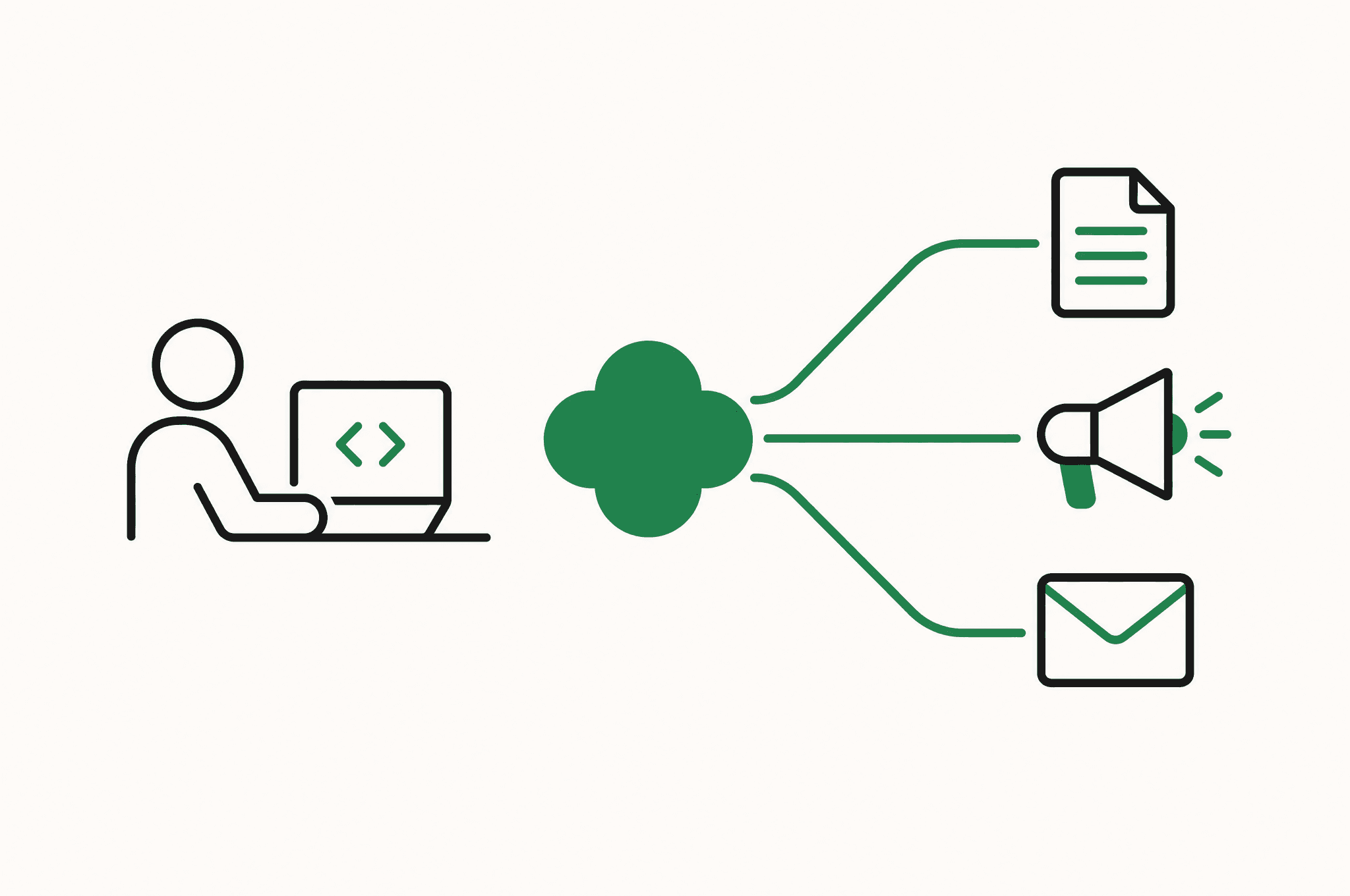
What changes Maya's pattern is moving the starting cost off her desk. Revnu is an AI growth agent that runs SEO, outbound, and ads as one system, and her job is to approve or correct what it drafts rather than to produce it.
Setup looks like wiring, which is the part Maya can tolerate. She connects her site and docs so the agent learns exactly what the tool does, who it is for, and the language her users actually use. She connects Search Console so the agent sees which technical queries her domain is already close to ranking for. She connects Slack, where she lives, so drafts surface in a channel instead of a dashboard she would never open. Thirty minutes of connecting things she understands, and the growth work finally has somewhere to land. From there the agent makes the first move in every lane, which is the move Maya never makes.
The SEO lane: docs-led content that ranks
The agent starts with SEO, because for a dev tool it is the channel that pays back longest. It reads Maya's docs and product, then targets the queries a developer types when they have the exact problem her CLI solves: not "best developer tool," which she will never rank for, but the specific, low-competition technical phrasing of the pain. It drafts content shaped like documentation, a clear how-to with real commands and real output, because that is what ranks and what engineers actually read.
The first draft lands in Slack as a finished post. Maya reads it, fixes one flag that was slightly wrong, and approves. It publishes. That is a ranking-quality technical page shipped in a few minutes of her attention instead of the evening she was never going to spend. Over a few weeks this becomes a small library of pages each targeting one real query, which is exactly how SEO for startups compounds for a young domain: not one viral post, but a steady stack of pages that each catch a developer at the moment of the problem.
The outreach lane: messages an engineer would not delete
Outbound to developers is where most founders give up, and where the agent's research earns its place. It does not blast a template. It finds developers and teams whose work signals they would hit the exact problem Maya's tool solves, reads their recent repos or posts, and drafts a short, specific message that references something true about what they are building. Not flattery, a real observation, the kind of note one engineer sends another.
Maya sees the draft, the reasoning, and the target. She kills the two that miss the technical mark, approves the rest, and the agent sends them and follows up like a person. The discipline behind that is in cold email that gets replies; the point for a dev-tool founder is sharper, because an engineer forgives a generic message even less than most. The ten minutes of research per contact, the part that made Maya quit, is the part the agent does, and it is the part that decides whether the message gets a reply or a delete.
The ads lane: small, honest, and last
Ads come last and small, because for developers they are a test, not an engine. The agent does not propose a big spend into a skeptical audience. It proposes one tight experiment: a single developer-appropriate placement, two honest pieces of copy that promise exactly what the tool does and nothing more, and a budget cap Maya sets. It explains what the test is meant to learn and waits for her approval before spending a cent.
Because all three lanes share one learning loop, the test is not isolated. The phrasing that earned replies in outreach becomes the ad copy worth trying; the query that started ranking becomes the angle. And the result feeds back the other way, so a message that converts in the ad sharpens the next post and the next outreach line. That shared loop is the whole difference between three disconnected tools and one growth agent, and the honest mechanics of spending small on paid are in AI for paid ads.
Why the approval gate matters most for developers
Every draft the agent produces waits for Maya's yes before it touches the world. For a developer audience this is not a nicety, it is survival. One inaccurate claim in a docs post, one tone-deaf cold message, one ad that overpromises, and the engineers she most wants quietly write her tool off. Trust with developers is expensive to earn and cheap to lose.
The gate is what makes the agent usable for someone who cares about that trust. Maya is not handing her voice to a black box; she is reviewing finished, technically grounded drafts and steering them. The first week she corrects more than she approves, and the agent learns the claims she will and will not make, the precision her audience expects. By the third week she mostly approves, because the drafts now sound like an engineer wrote them. The design behind that control is in AI growth agents.
The outcome: the first hundred, and a system that keeps going
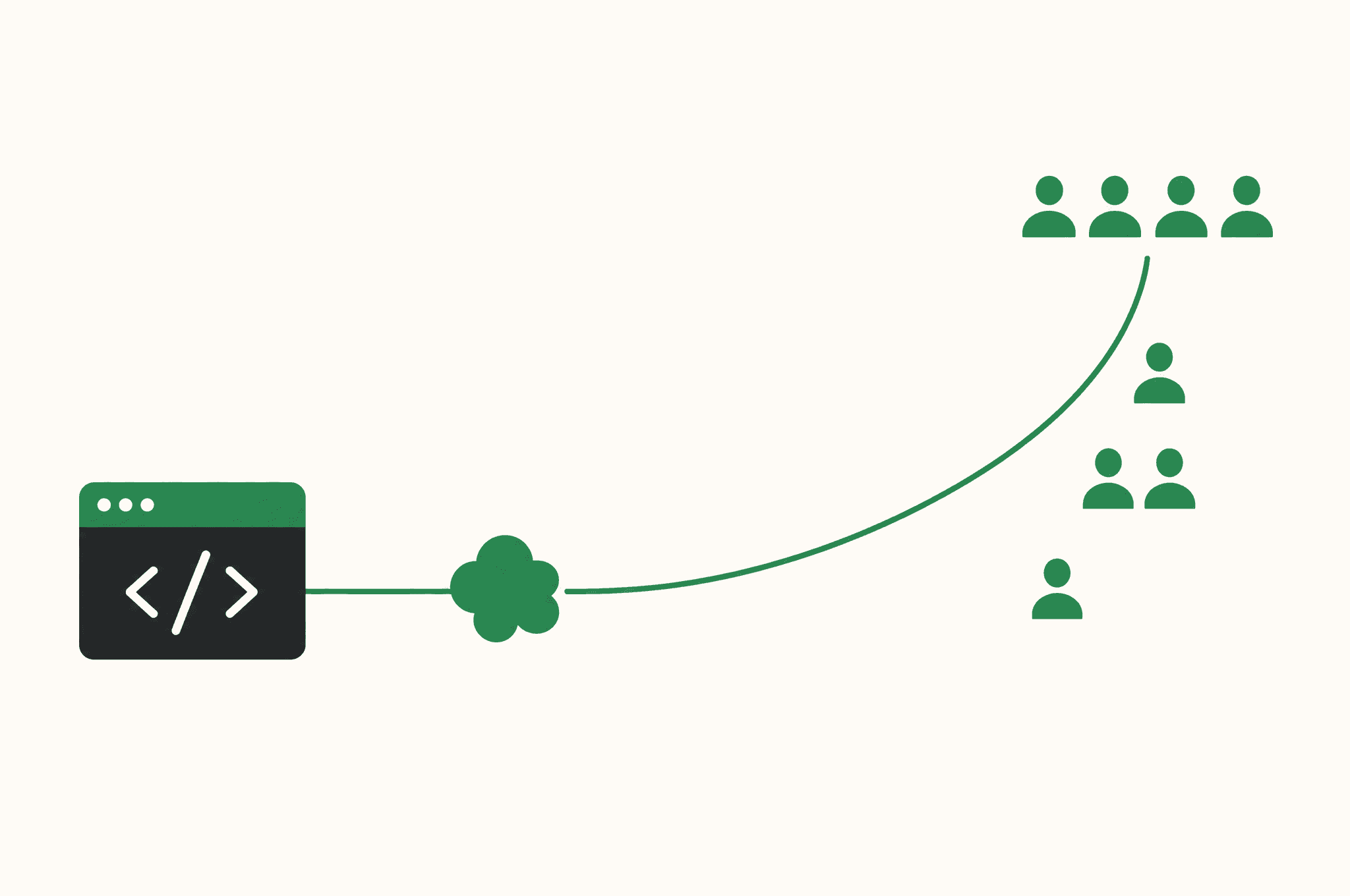
Run this for a few weeks and Maya's numbers stop depending on luck. She has a small set of docs-led pages ranking for the exact problems her CLI solves, pulling in developers at the moment they search. She has a steady outreach motion landing real, researched messages, with replies in a thread instead of nowhere. She has one ad test that told her which promise converts, feeding the other two lanes. The first hundred signups arrive the way they almost always do for a dev tool, from content and outreach, with paid as a small accelerant rather than the source.
The deeper win is that none of it required Maya to become a marketer or to stop building. She reviews drafts in Slack in the gaps she already had, and the agent does the starting she never would. If you are Maya, the move is not to finally learn developer marketing. It is to stop being the person who has to begin the work. Connect your product, your docs, and Slack, point Revnu at the developers you want, and approve the first post, the first outreach list, and the first ad test this week. You keep the judgment your audience demands; the agent removes the labor underneath it, and the first hundred signups stop being an accident.
Let Revnu run this for you.
Connect your product and Revnu drafts the SEO, ads, and outbound. You approve in one tap. Book a 15-minute call and see it on your stack.
Book a demoFrequently asked questions
Why is marketing a developer tool so hard?
Because the audience distrusts marketing. Engineers ignore hype, install ad blockers, and evaluate tools by reading docs and trying them, not by reading landing-page copy. That means the channels that work are unusual: documentation that ranks, genuinely useful technical content, and outreach that proves you understand their stack. A generic marketing playbook fails on developers, which is why most dev-tool founders stall on distribution.
How does an AI growth agent market to developers specifically?
It leans into the channels engineers actually use. It drafts docs-led and comparison content aimed at the exact queries developers search, writes outreach that references a real repo or post rather than a template, and proposes small, honest ad tests on the platforms where developers gather. Every draft reflects your real product because the agent read your site and docs, so the work sounds like an engineer wrote it, not a marketer.
Can this work before I have any traffic or budget?
Yes, and that is the common starting point. With no traffic, the agent focuses on the cheapest durable channels first: content targeting low-competition technical queries you can actually rank for, and direct outreach to developers who fit. Paid comes later and small, as a test rather than a crutch. The first 100 signups almost always come from content and outreach, not ads, which is exactly where the agent starts.
Will the agent post or email developers on its own?
No. Every draft, every post, outreach message, and ad waits for your approval before it goes out. For a developer audience this matters more than usual, because one tone-deaf or inaccurate message burns trust fast. You review each draft, correct anything that is technically off, and approve what is right. The agent removes the labor of producing the work, never the judgment about what represents you to other engineers.
Written by
Art Freebrey
Co-founder, Revnu