Solo founder marketing
How a Solo Founder Runs SEO, Ads, and Outreach at Once

On this page
It is Thursday and Maya, the only person at her two-month-old B2B SaaS, has a blog post half-drafted in one tab, a LinkedIn ad sitting in review in another, and a list of forty prospects she meant to email on Monday. She wrote three of those emails. Then a customer hit a bug, support ate the afternoon, and the list went cold. By Friday the ad is still unpublished because she never wrote the second variant, and the blog post is one of four she has started and none she has finished. Maya is the founder, the engineer, the support team, and the entire marketing department. She is not bad at growth. She is one person trying to run three channels by hand, and three channels by hand is more than one person has hours for.
This is the default state of a solo founder doing growth: every channel half-done, nothing on a cadence, and the work that compounds always losing to the work that is on fire today. The fix is not "try harder" or "pick one channel and quit the others." It is changing who does the drafting so the founder can keep the judgment and lose the hours.
The before: three part-time jobs and one person
Each of Maya's channels is a real job, not a checkbox. SEO needs a post a week, every week, for months before a young domain ranks for anything. Ads need fresh creative and a hand on the budget or spend leaks into nothing. Outreach needs a steady send and, harder still, a same-day reply when a prospect actually answers. Run one well and you can almost keep up. Run all three by hand and you keep none of them.
So Maya does what nearly every solo founder does: she triages. The channel that screams loudest this week gets her attention, and the other two rot. The trouble is that the rot is invisible until it is expensive. Skip SEO for a month and you do not feel it now; you feel it in six months when the rankings that should have been compounding simply are not there. A young domain with no backlinks already struggles to rank no matter how good the content is, and a stop-start cadence widens that gap instead of closing it.
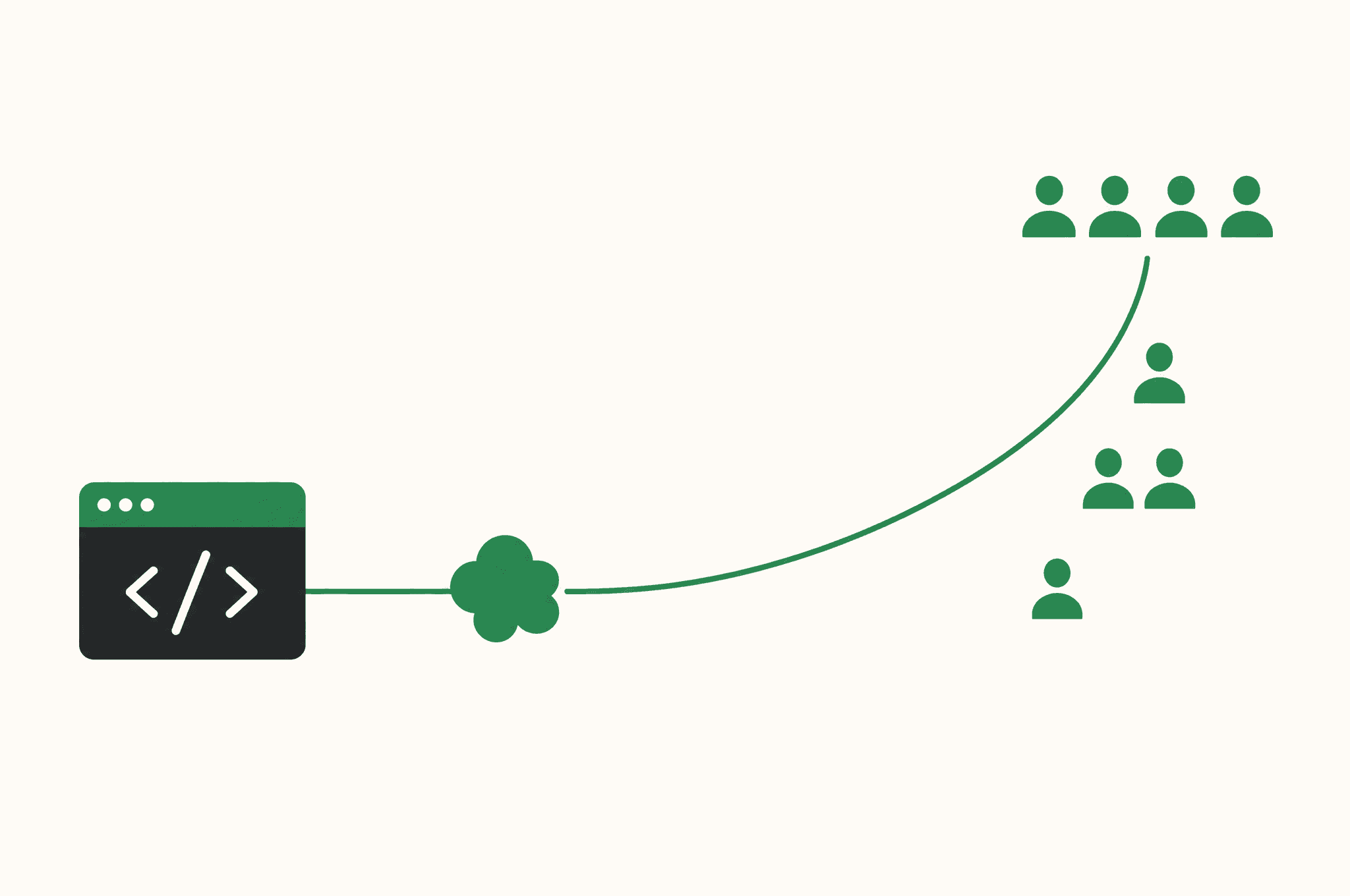
The deepest problem is that nothing she does in one channel makes the others better. The reply that finally landed in outreach never becomes ad copy. The search term quietly converting on her site never becomes an outreach angle. Every channel learns alone and forgets fast, so Maya is not just short on hours. She is paying full price for each channel and getting none of the compounding that should make the next month easier than the last.
The shift: one agent that drafts every channel
The answer is not another dashboard. It is moving the drafting off the founder's plate while keeping the deciding firmly on it. That is what an AI growth agent does, and it is worth being precise about the division of labor, because the value lives in the split. The agent takes the repeatable production work, the research, the first draft, the follow-up, and hands the founder the judgment calls.
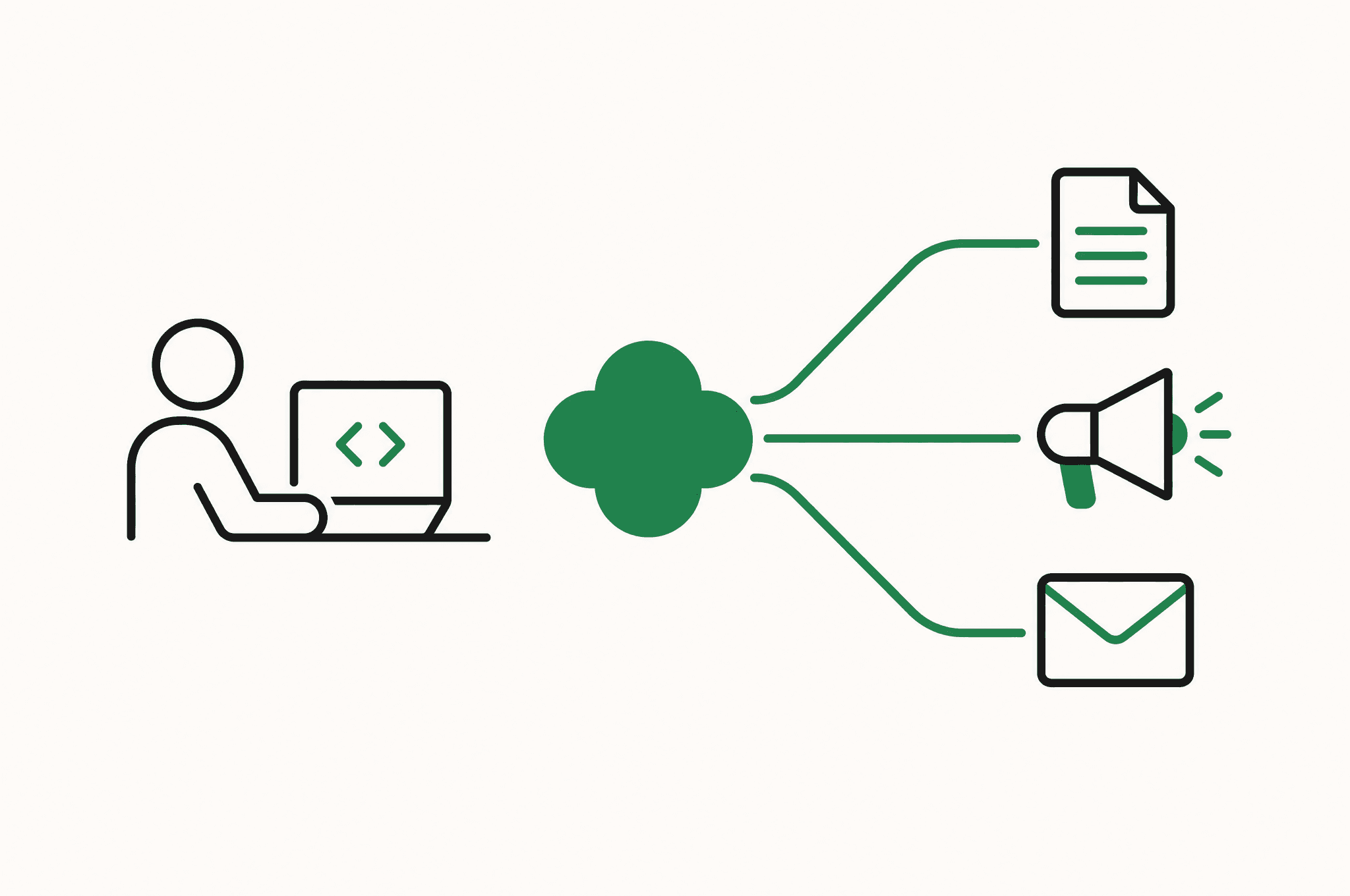
With Revnu, Maya connects her channels and the agent runs them as lanes of one motion rather than three apps she babysits. The SEO lane drafts the weekly post, on her product and her positioning, because the same agent that writes her outbound also knows what she sells. The ads lane drafts creative and variants and watches the spend. The outbound lane researches a prospect, writes a specific first email, and drafts the same-day reply when someone answers. Critically, it is one agent, so the lanes are not walled off. The phrasing that earns replies in cold email becomes a tested ad headline; the keyword converting in search becomes the hook of an outreach sequence. This is the practical version of what how to use AI for marketing describes: not a tool per task, but one operator across the whole funnel.
Then the part that keeps Maya sane: nothing sends on its own. Every post, every ad, every email is a draft waiting in a queue. She opens her phone between a support reply and a code review, reads the draft, edits a line that does not sound like her, rejects the one prospect who is a bad fit, and approves the rest in a tap. The agent did the ninety minutes of writing. Maya did the ninety seconds of deciding. The cadence holds because the bottleneck moved from "find time to write" to "find time to approve," and approving is something a founder can actually do every day.
What the cadence looks like in practice
Picture Maya's Thursday now. The agent has drafted the week's blog post overnight; she reads it on the train, tightens the opening, and approves it. Two ad variants are in her review queue; she kills one, approves the other, nudges the budget. Eight outbound emails are drafted against prospects the agent researched; she rejects two that are off-target and sends six. A prospect from last week replied this morning, and the reply draft is already waiting, written in the thread's context, so she answers in the same hour instead of three days later. The whole pass took twenty minutes. The same work by hand was the reason three channels never all ran in the same week.
The compounding is the quiet win. Because one agent sees all three lanes, a cold-email opener that pulls replies does not stay buried in her inbox; it surfaces as ad copy, and the principles behind that, that the reply comes from relevance, run straight from cold email that gets replies into the ad lane. A keyword that converts in search becomes the angle of next week's outreach. The shared loop means month three is easier than month one, which is exactly backwards from the by-hand version, where every month is the same uphill start because nothing learned carries over.
Maya still owns the spend and the strategy. The ads lane drafts and watches, but she sets the budget and the bar: the agent does the production and the monitoring, the founder keeps the money decisions. She is not handing over the wheel. She is handing over the typing.
The outcome: all three running, judgment intact
The result is not "marketing on autopilot," and Maya would not want that. The result is that all three channels are finally running at once, every week, instead of one limping along while two sit dead. The blog ships weekly and the domain starts to compound. The ads run with fresh creative and a watched budget. Outreach sends on a steady cadence and replies land same-day. None of it went out without Maya reading it, so it all still sounds like her and reflects her judgment about who is worth pursuing and what is worth saying.
And the part that matters most to a founder: she got her build time back. The hours that used to vanish into half-finished drafts now go into the product, which is the one thing only she can do. This is the heart of the one-person growth stack, a single founder running a full-funnel growth motion not by working more hours but by changing who does the work that does not need her specifically. The drafting is delegable. The judgment is not. Revnu is built around exactly that line.
The honest caveat: this works because Maya stays in the loop. An agent left to send on its own would drift off her voice and pursue prospects she would skip. The approval step is the whole point, not a speed bump. A solo founder running every channel does not mean a founder who stopped paying attention. It means a founder whose attention finally goes to the right thirty minutes instead of the wrong six hours.
Where this leaves you
If you are a solo founder picking one channel because three is impossible by hand, the constraint you are fighting is not strategy, it is hours, and hours are exactly what an agent gives back. Connect your SEO, ads, and outbound to Revnu, let one agent draft all three, and approve the work in a tap each morning. You keep your voice, your spend, and your judgment about who and what is worth it; you lose the drafting that made running three channels at once a fantasy. Start with one week of holding the cadence on all three lanes, and watch which version of your Thursday you would rather have. The founder who keeps all three channels alive, without giving up the build, is the one who let the agent do the typing.
Let Revnu run this for you.
Connect your product and Revnu drafts the SEO, ads, and outbound. You approve in one tap. Book a 15-minute call and see it on your stack.
Book a demoFrequently asked questions
Can a solo founder really run SEO, ads, and outreach at the same time?
Not by hand, and that is the honest answer. Each channel is a part-time job, and one person doing all three by hand keeps none of them on a cadence. What changes the math is letting one agent draft every channel and approving the work. The founder supplies judgment and product knowledge; the agent supplies the hours, so all three lanes actually stay live.
Which growth channel should a solo founder focus on first?
The usual advice is pick one, and that advice exists because you only have so many hours. But SEO compounds slowly, ads buy speed, and outreach starts conversations, so they cover different jobs. The better move is to keep all three running at a light cadence rather than betting everything on one. An agent that drafts each makes running all three realistic for one person.
Does using an agent for marketing mean losing control of the message?
No, because nothing sends without approval. Revnu drafts the post, the ad, and the outbound email, then waits. The founder reads each draft, edits or rejects it, and approves in a tap. That keeps every word in the founder's voice and judgment in the founder's hands, while removing the hours of drafting that made running three channels impossible alone.
How does one agent doing all three channels beat three separate tools?
Three separate tools each learn in their own silo, so a reply that lands in outreach never improves your ads, and a search term that converts never shapes your email. One agent across all three shares what works between channels. A phrase that earns replies becomes ad copy; a high-intent keyword becomes an outreach angle. The learning compounds instead of staying trapped per tool.
Written by
Art Freebrey
Co-founder, Revnu